Transporter-16 is more than a 119-payload count: what is flying on SpaceX's latest rideshare and why it matters
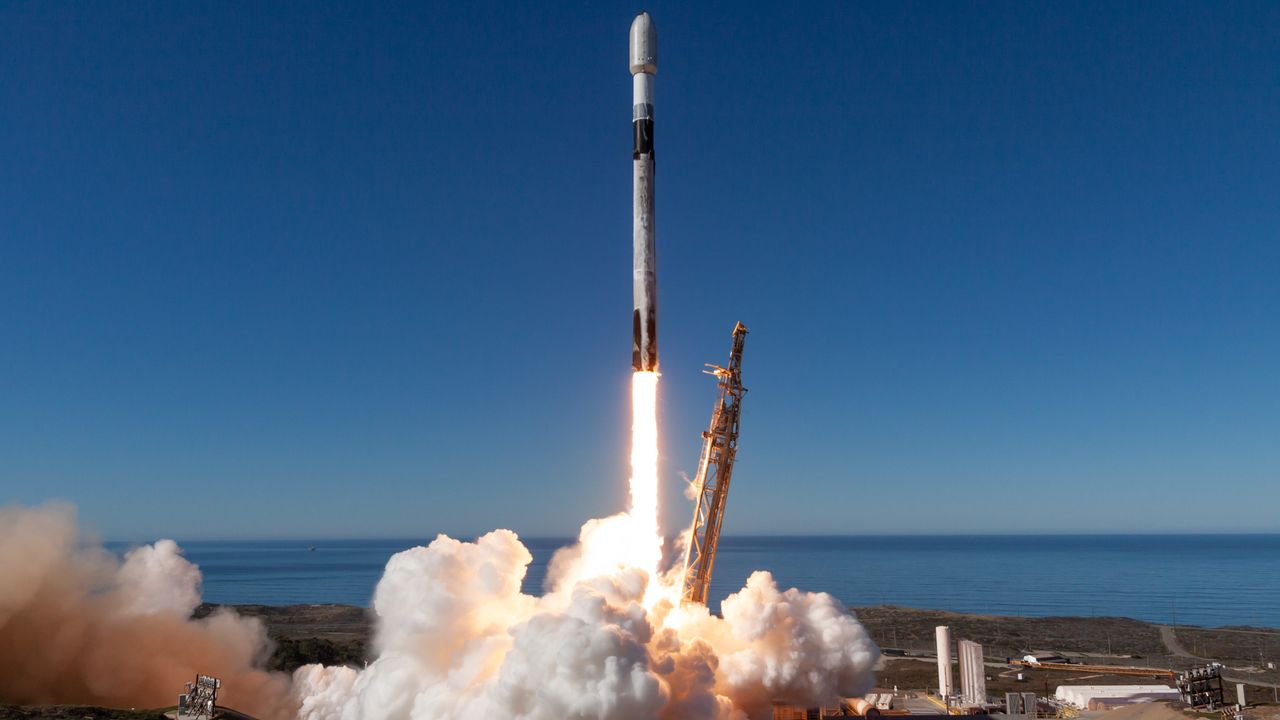
Transporter-16 launched from Vandenberg on March 30 with 119 payloads, but the more revealing story is the mix of hardware inside the stack: NASA science CubeSats, a hosted orbital service vehicle, reentry test hardware, radar and RF constellation spacecraft, and a dense batch of commercial and university missions sharing one Falcon 9.
This mission shows how the Transporter line has evolved from a cheap launch option into a proving ground for orbital infrastructure. On one rideshare, operators are buying flight heritage for power systems, proximity operations, in-space communications, atmospheric science, synthetic-aperture radar, RF geolocation, and multi-satellite constellation deployment.
The Vigoride portion is one of the coolest subplots on the whole launch. NASA says R5-S10 will pass data over an in-space Wi-Fi link from Solstar, turning the mission into a small communications experiment as well as a spacecraft-operations demo. The same hosted vehicle is flying CisLunar Industries' EPIC power-conversion technology, which NASA's Flight Opportunities program is backing as a lighter, more efficient way to handle 1 to 100 kilowatts of spacecraft power. NASA is also using the rideshare to fly sensors on Varda's W-6 capsule, gathering heating and pressure data on instrumented C-PICA tiles during reentry. That means one Transporter mission is supporting communications, servicing-adjacent operations, power electronics, and thermal-protection learning at the same time.
Exolaunch's manifest shows the commercial side is just as interesting. The company lists six ICEYE satellites, three HawkEye 360 spacecraft, multiple Spire payloads tied to navigation, optical inter-satellite links, and AIS, plus eight IRIDE satellites for OHB Italia, new spacecraft for Satellogic, and a long tail of university and startup missions from Europe, Asia, and the United States. The significance is not just diversity for its own sake. Transporter-16 looks like a snapshot of where the low-cost launch market is heading: routine rideshares are becoming the cheapest common test range for sensing, constellation scaling, and the first generation of orbit-side infrastructure that later missions will depend on.