MLI
← Back to News
ScienceApr 9, 2026

Apollo Mission Control Center Restoration

Apollo Mission Control Center Restoration
Image source: NASA Science
Story Brief

While history often recognizes the astronauts who became the first humans to walk on the Moon, equally noteworthy are the people of Mission Control, without whom the missions would not have been possible. With less computing power than a present-day cell phone at their disposal, Apollo-era flight controllers in Houston were able to safely launch humans into space, and even land them on our nearest celestial neighbor. The Historic Mission Control Center at NASA's Johnson Space Center (JSC) was home to the planning, monitoring and command controls that were essential to America's early human spaceflight program.

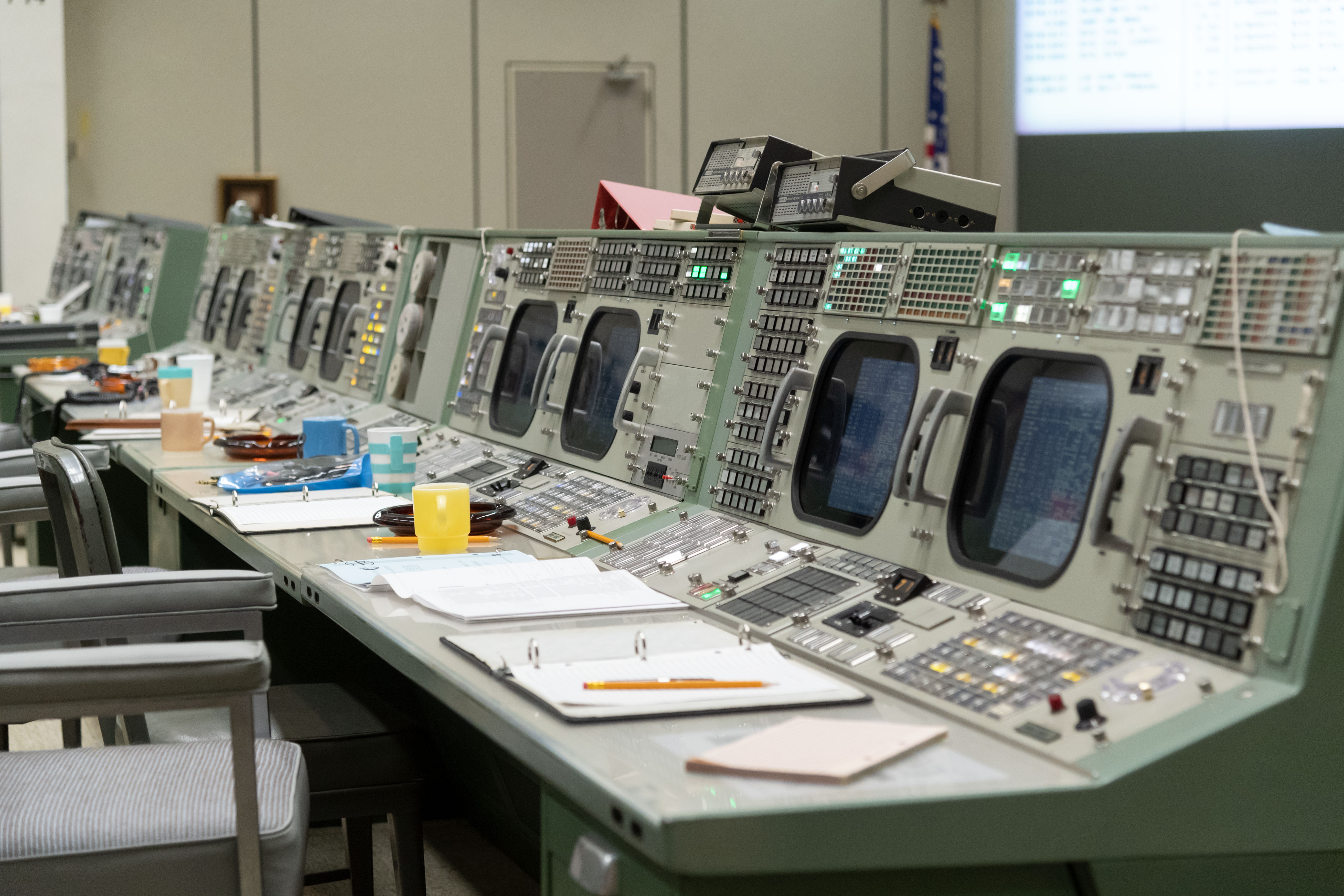
The restoration project, which was conceived in 2013, began in November 2018 and was completed in July 2019. It restored the Historic Mission Control to its Apollo-Era condition, and features the authentic consoles used to monitor nine Gemini missions, all Apollo Moon missions, and 21 space shuttle missions. This includes the Apollo 11 flight that first landed men on the moon, the Apollo 13 mission that famously experienced an in-flight emergency, and 40 other space missions.

Integral to the Mission Control Room are the consoles used by the flight directors to monitor different aspects of spaceflight missions. Each console is roughly 1,200 pounds and used cathode ray tube (CRT) technology to process and display information. A system of pneumatic tubes (vacuum tubes with cylindrical containers) were used alongside the consoles to help mission control team members communicate with one another.

Reference Details
Mentioned Companies & Entities