COPV Damage Tolerance Life Demonstration Guidelines
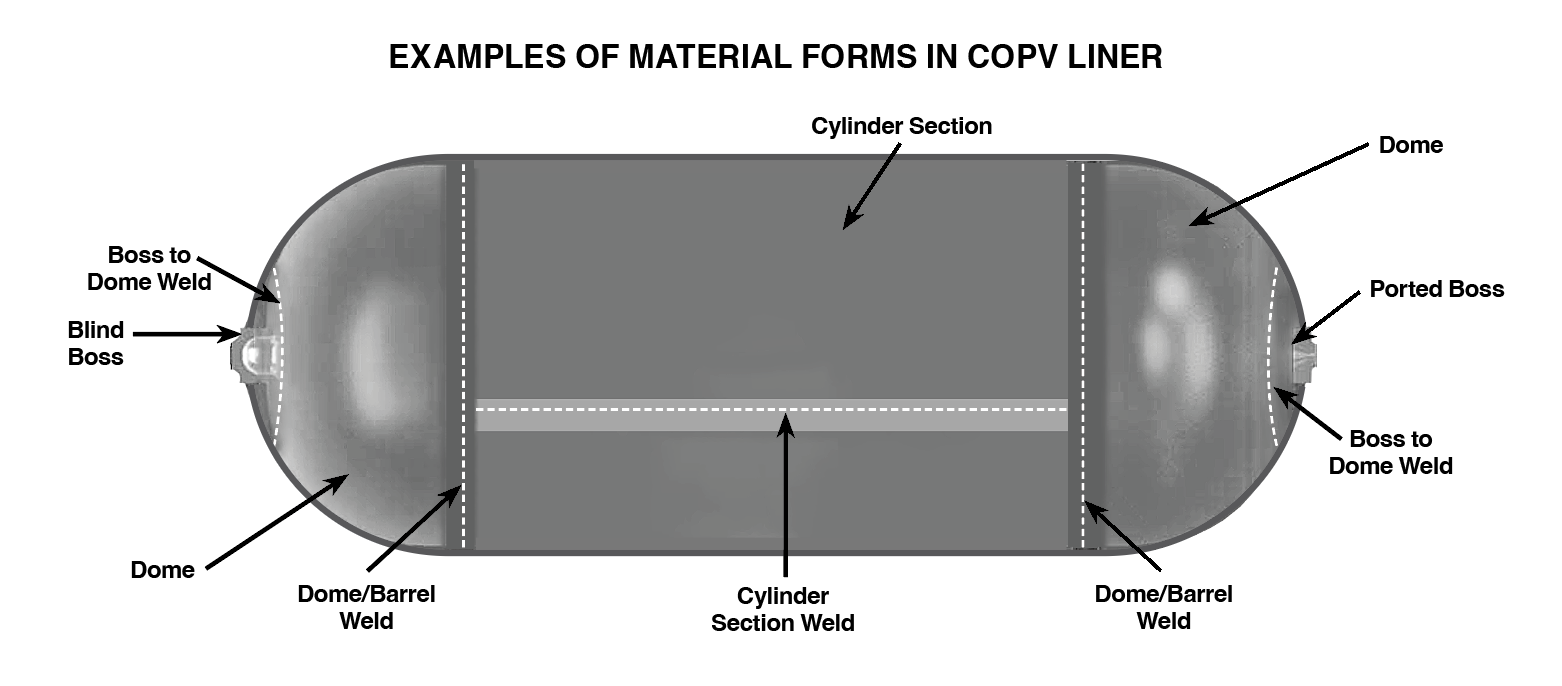
The NESC has invested significant time and resources to better understand composite overwrapped pressure vessels (COPV) performance and more importantly, how these complex, high-pressure storage systems can fail. These vessels, which store high pressure propulsion and life-support system fluids on launch vehicles and spacecraft, are ubiquitous at NASA, and failures have the potential to be catastrophic.
This year the NESC finalized work on a set of guidelines intended for use by NASA civil servants and support contractors in their development or assessment of damage-tolerance demonstration data for COPVs.
Previously referred to as "safe-life," damage tolerance life assumes detectable cracks exist before service and demonstrates that such cracks, in worst-case locations and orientations, will not grow to failure over the service life. A 4x life factor is applied, requiring that cracks do not reach failure (leakage or unstable growth) within four times the expected service cycles.