Moon Water and Ices - NASA Science
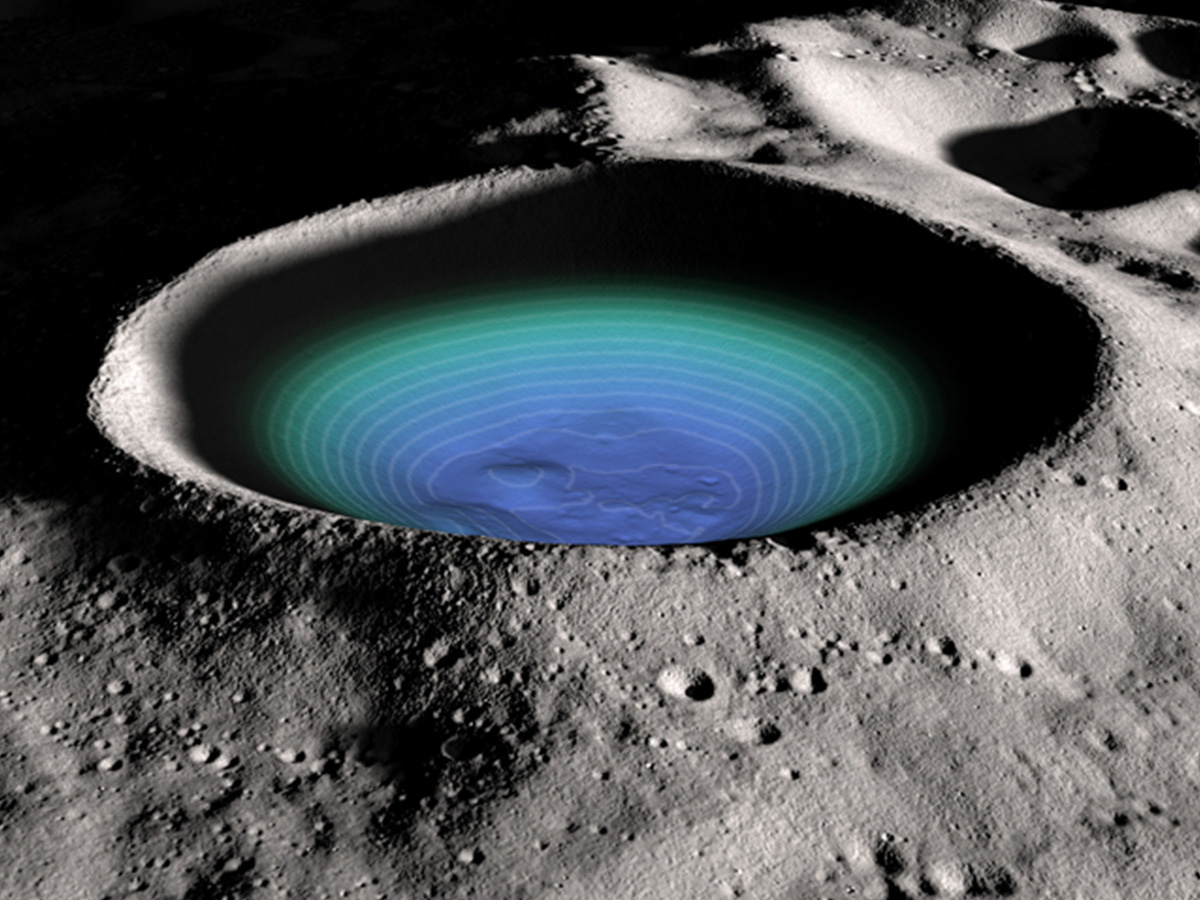
What's big, covered in water, yet 100 times drier than the Sahara Desert? It's not a riddle, it's the Moon! For centuries, astronomers debated whether water exists on Earth's closest neighbor.
As scientists made headway in understanding the behavior of substances that are prone to vaporize at relatively low temperatures – called volatiles – theoretical physicist Kenneth Watson published a paper in 1961 describing how a substance like water could exist on the Moon.
When early astronomers looked up at the Moon, they were struck by the large, dark spots on its surface. In 1645, Dutch astronomer Michael van Langren published the first-known map of the Moon referring to the dark spots as "maria" – the Latin word for "seas" – and putting into writing the widely-held view that the marks were oceans on the lunar surface. Similar maps from Johannes Hevelius (1647), Giovanni Riccioli and Francesco Grimaldi (1651) were published over the next few years.