NASA’s Hubble Revisits Crab Nebula to Track 25 Years of Expansion
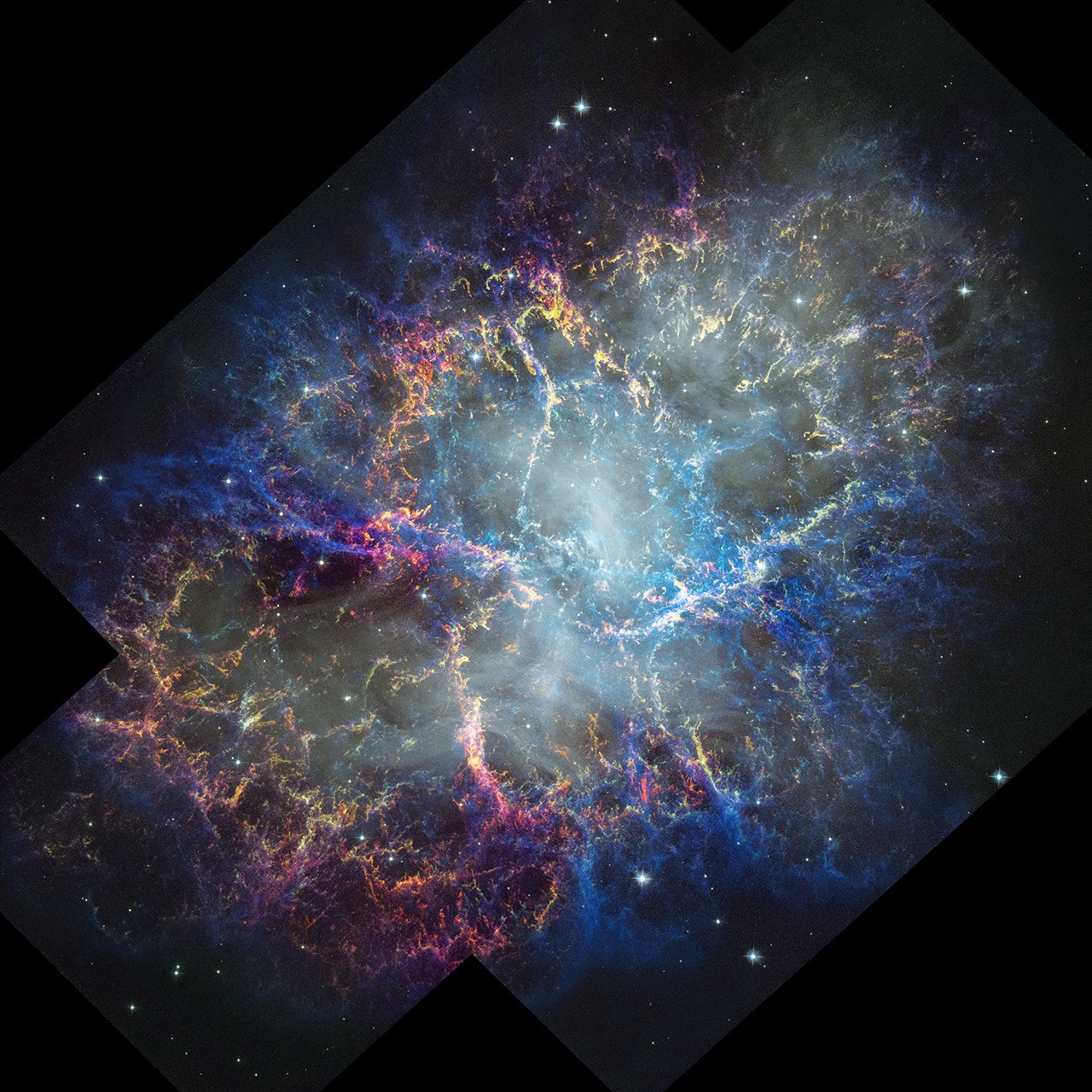
A quarter-century after its first observations of the full Crab Nebula, NASA's Hubble Space Telescope has taken a fresh look at the supernova remnant. The result is an unparalleled, detailed look at the aftermath of a supernova and how it has evolved over Hubble's long lifetime. A paper detailing the new Hubble observation is published in The Astrophysical Journal.
This new Hubble observation continues a legacy that stretches back nearly 1,000 years, when astronomers in 1054 recorded the supernova as an impressively bright new star that, for weeks, was visible even during the day.
"We tend to think of the sky as being unchanging, immutable," said astronomer William Blair of Johns Hopkins University, who led the new observations. "However, with the longevity of the Hubble Space Telescope, even an object like the Crab Nebula is revealed to be in motion, still expanding from the explosion nearly a millennium ago.