Track NASA’s Artemis II Mission in Real Time
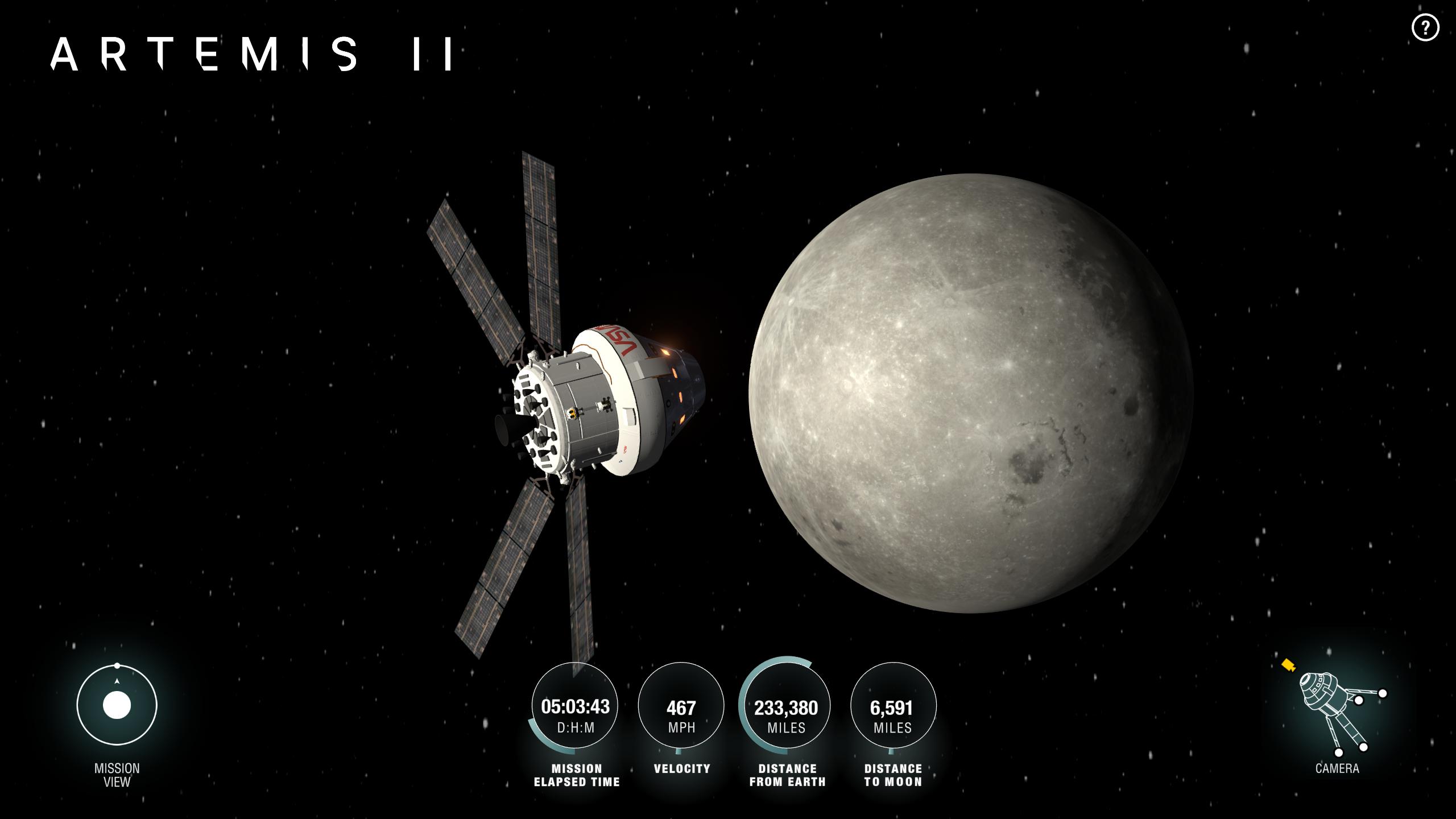
NASA is reporting a notable science development: Track NASA’s Artemis II Mission in Real Time. The principal organizations in focus are NASA and Artemis, with source timing mapped to 2026-03-06 ET and current timing cues at no explicit live window was listed in this first report. Activity is centered on not explicitly specified in the initial source, and the mission objective appears to be to advance mission science objectives and sharpen follow-on research priorities.
Operationally, the immediate read is straightforward: As NASA invites the public to follow the Artemis II mission as a crew of four astronauts venture around the Moon inside the agency’s Orion spacecraft, people around the world can pinpoint Orion during its journey using the Artemis Real-time Orbit Website (AROW). During the approximately 10-day mission, NASA will test how the spacecraft’s systems […]. Technical emphasis is on the mission hardware and operations stack described by the source, while published parameters currently include 10-day. The most visible constraints are normal execution risk remains until follow-on confirmations are published; relative to recent similar events, comparative performance versus prior cycles is not fully quantified in the initial reporting.
Stepping back to context, this did not emerge in a vacuum. External drivers in play include limited macro context in the initial reporting, which helps explain why this update is landing now. From a reader perspective, the background signal is continuity in program and market execution pressure around NASA and Artemis. For payload/customer framing, payload and mission purpose are partially described, with additional details likely to emerge through operator updates.
The next 24-72 hours matter here. If execution holds, the likely outcomes are schedule confirmation and stronger confidence in near-term milestones; if it slips, attention shifts back to readiness and risk controls. Source reliability is high for mission-status facts because the reporting is from an official agency source. Open questions still worth monitoring are downstream mission planning implications once peer/official follow-up is published, with best confirmation coming from NASA (https://www.nasa.gov/missions/artemis/artemis-2/track-nasas-artemis-ii-mission-in-real-time/) plus independent launch-tracker and agency follow-ups.
As NASA invites the public to follow the Artemis II mission as a crew of four astronauts venture around the Moon inside the agency’s Orion spacecraft, people around the world can p
Science updates matter operationally because they influence mission priorities, instrument planning, and broader public interest in space programs.