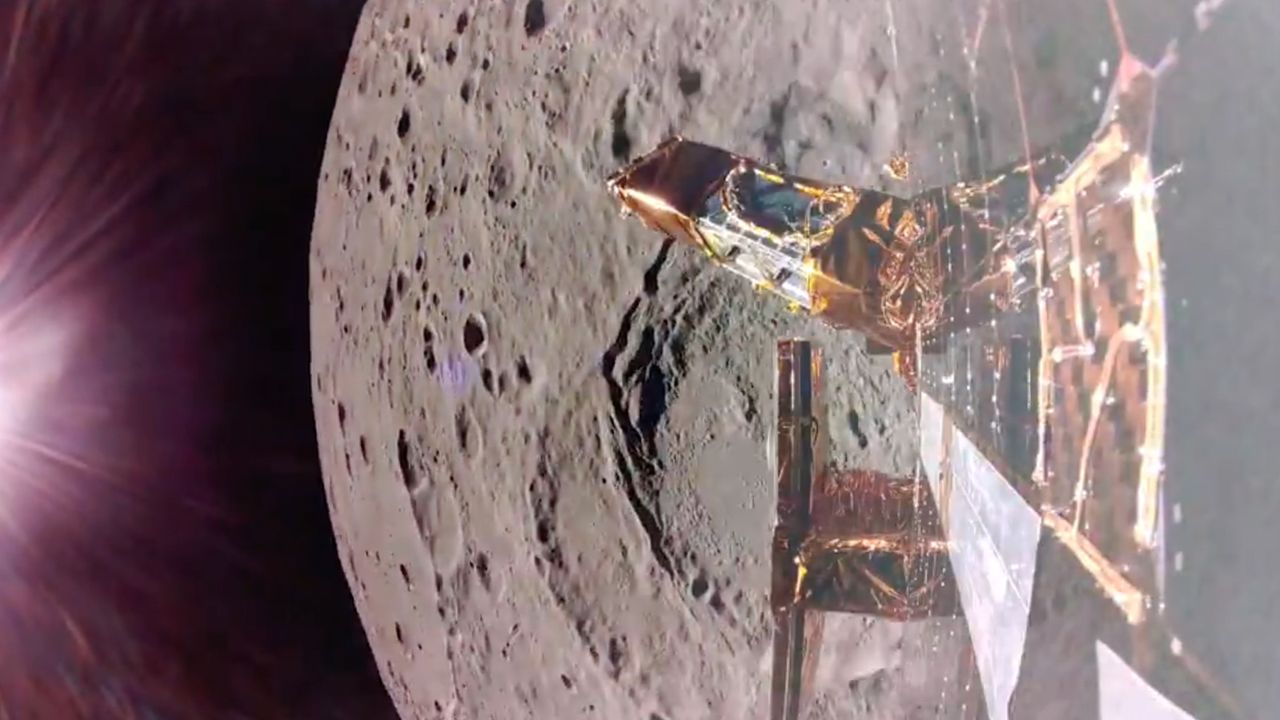
Data from Firefly Aerospace's Blue Ghost lunar lander casts doubt on the decades-old view of the moon as divided between a hotter near side and cooler far side.
The first science results from a private spacecraft on the moon are challenging long-standing ideas about how our natural satellite evolved.
The car-sized Blue Ghost deliberately targeted Mare Crisium — a volcanic plain "far outside" the traditionally defined heat-rich region — where the interior was expected to be cooler, Nagihara said.