Earthshine will reveal the moon's hidden face this week — here's how to see it
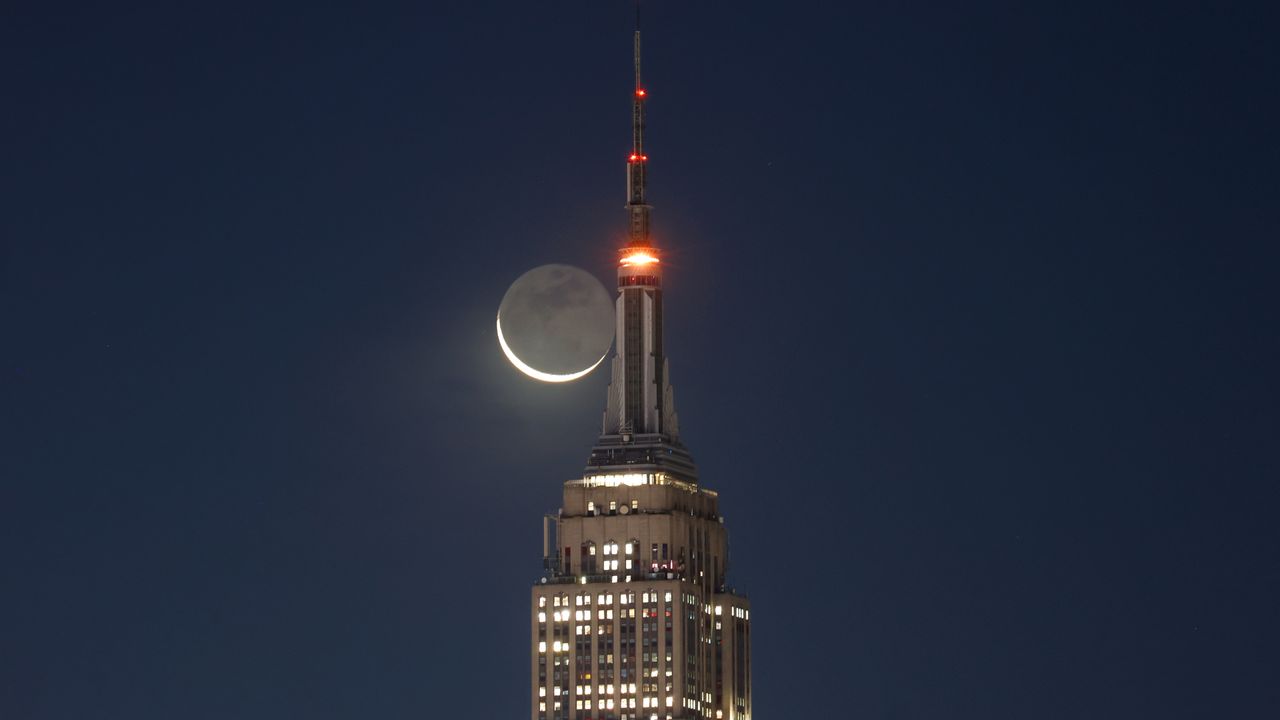
Look to the west after sunset this week for a spectacular sight, as the razor-thin waxing crescent moon hangs low above the horizon with earthshine bathing its unlit surface in a soft, otherworldly glow.
This month's new moon phase occurred at 9:23 p.m. EDT on March 18 (0123 GMT on March 19) as the moon lay between the sun and Earth in the daytime sky.
Your first chance to spot earthshine infusing the lunar surface will come immediately after sunset on March 19, though you'll need to be lucky and stake out a viewing spot with a clear view of the western horizon to stand a fighting chance. The whisper-thin waxing crescent moon will be visible to the lower right of Venus 10 degrees above the horizon — approximately the width of your clenched fist held at arm's length.