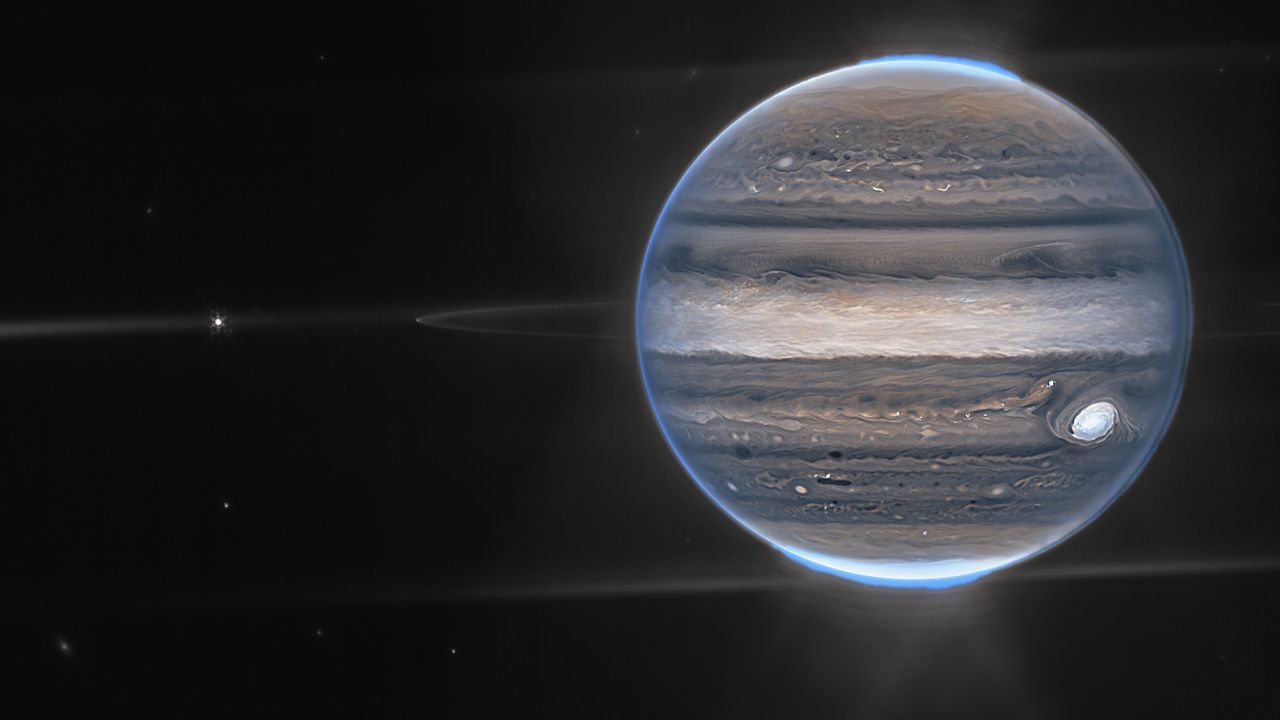
Jupiter's moons can have surprising effects on the world's displays of auroral lights by "stomping down" on the planet's gigantic magnetic environment.
These surprising effects, detected in observations from the James Webb Space Telescope (JWST), include a cold spot in Jupiter's atmosphere, and a rapid increase in the density of charged particles.
"The moons constantly interact with the magnetic field and plasma surrounding the planet and that interaction leads to highly energetic particles traveling down magnetic field lines and then crashing into the planet's atmosphere, creating the auroral footprints that map to where the moons orbit around Jupiter," said Katie Knowles, who is a Ph. D. Researcher at Northumbria University in the U.