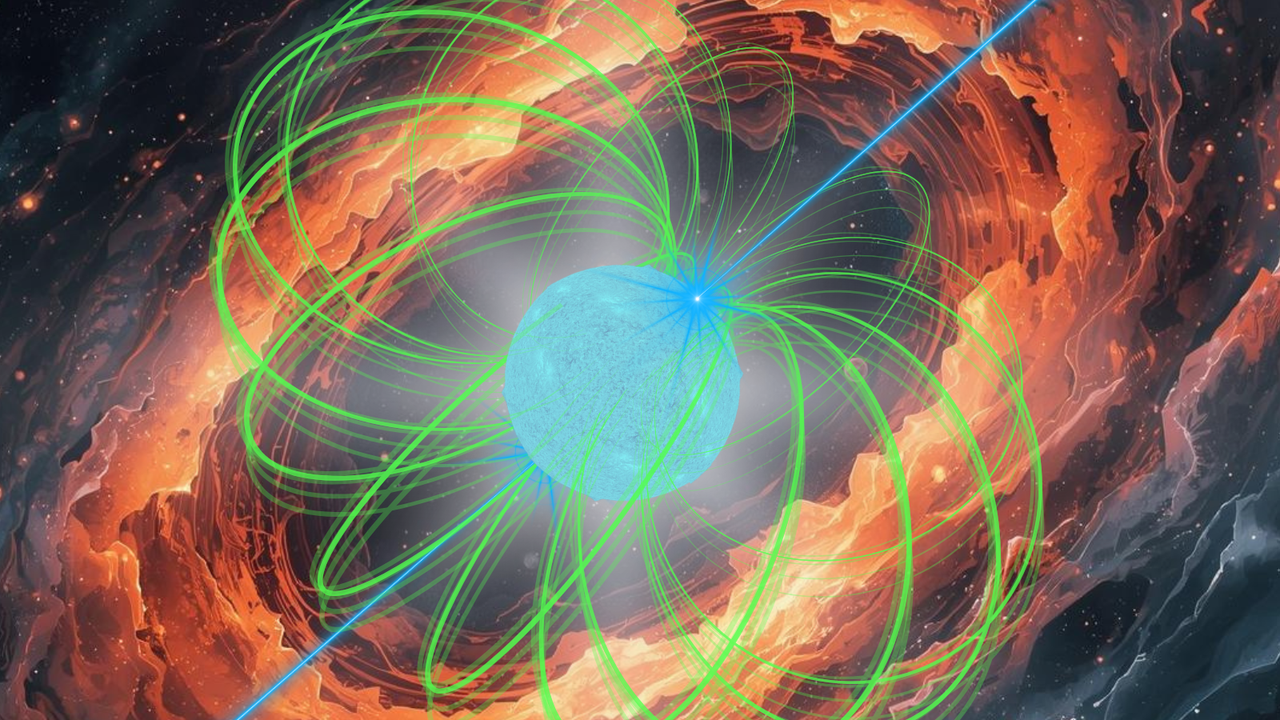
Astronomers have discovered that rapidly spinning dead stars called neutron stars at the heart of pulsars can blast out radio signals from their edges. The finding could overturn decades of thinking suggesting that pulsars only blast beams of radiation from close to their surfaces and at their poles.
One useful outcome of this research and its findings is the fact that millisecond pulsars should be easier to detect than astronomers had previously theorized.
This could also explain why some millisecond pulsars have strange, broken-up radio wave profiles. What astronomers observe, be it radio waves from the poles, from the current sheet, or both, depends on how the pulsar is oriented in relation to our telescopes.